

By: Karen Ardila Lopez, MSc
PhD Candidate – University of Calgary
Have you ever heard that meditation can “rewire” your brain? It turns out, this isn’t just a catchy phrase, it’s backed by neuroscience. Studies using brain imaging techniques reveal that regular meditation can change the structure and connectivity of your brain. But what does this mean for you, and why would you want a “bigger, puffier” brain? Let’s break it down.
Meditation isn’t just about relaxation; it actively strengthens key brain networks involved in attention, emotion regulation, and self-awareness. Research in functional magnetic resonance imaging (a type of brain scan that tracks blood flow to show which brain regions are active) shows that meditation affects three main brain networks:
- Default Mode Network (DMN): This network is involved in mind-wandering and self-referential thoughts (like daydreaming or overthinking). Meditation helps quiet down unnecessary DMN activity, reducing rumination and increasing focus on the present moment.
- Frontoparietal Network (FPN): This is the brain’s command centre for cognitive control and decision-making. Meditation enhances FPN connectivity, making you better at regulating attention and emotions.
- Salience Network (SN): This network is responsible for detecting important information and shifting attention. The SN becomes more efficient with meditation, improving your ability to focus and manage stress.
In simpler terms, meditation strengthens the brain’s ability to focus, remain calm under stress, and improve self-awareness. These changes don’t just occur during meditation, they carry over into daily life, making you more resilient and mentally agile.
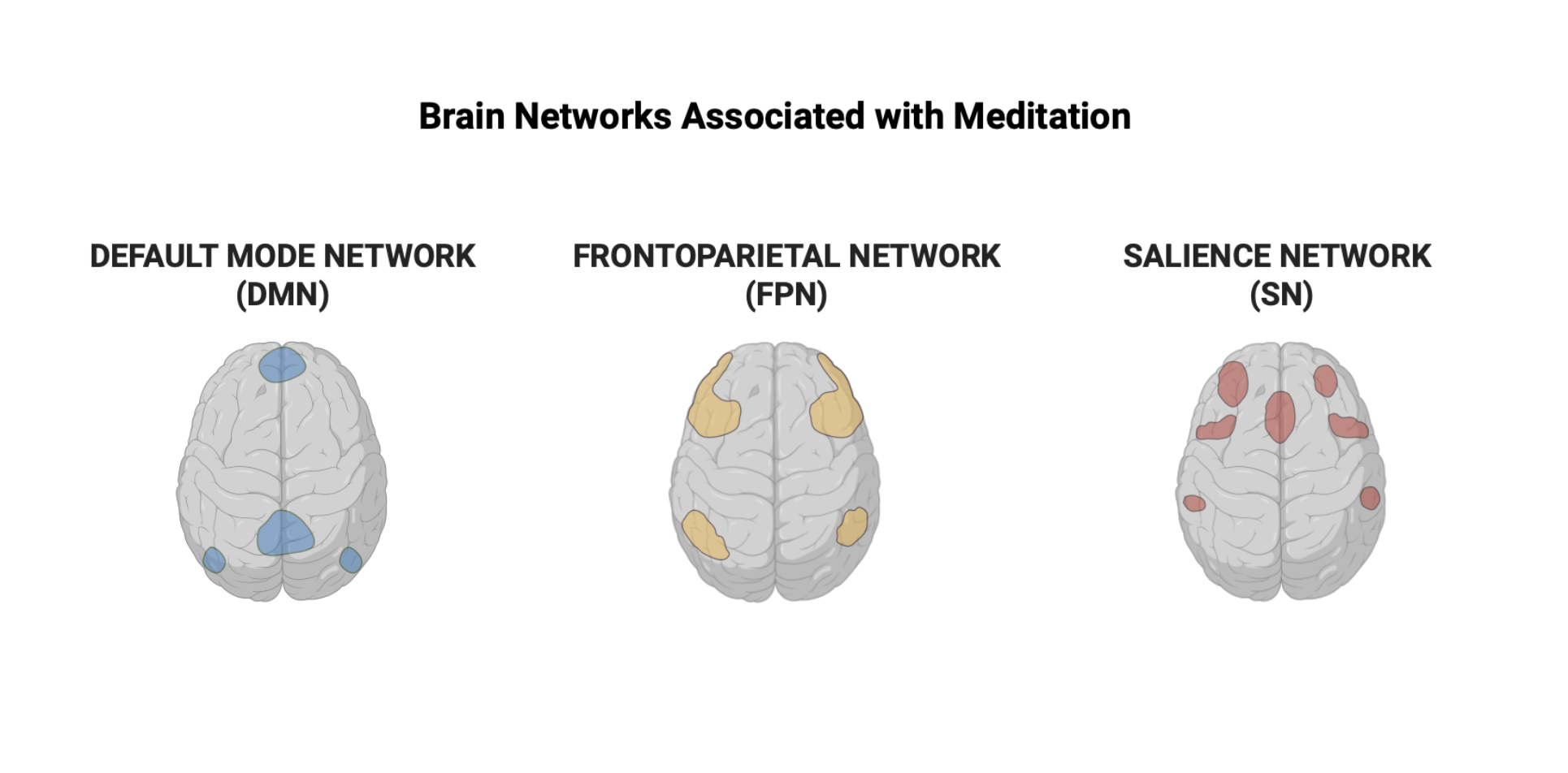
Figure 1 – Illustration of brain networks influenced by meditation, highlighting the Default Mode Network (DMN), Frontoparietal Network (FPN), and Salience Network (SN). Figure created by the author, inspired by doi.org/10.3389/fnhum.2023.1133367.
So, How Does Meditation “Puff Up” the Brain?
When scientists say meditation leads to a “puffier” brain, they mean increased gray matter density and improved neural connectivity. Gray matter is the part of the brain that contains most of its neurons and is crucial for processing information. More gray matter means better cognitive abilities, memory, and emotional control. As illustrated in Figure 2, this “puffy brain” reflects preserved structure and connectivity, rather than the atrophy and disruption seen in neurodegeneration.
Specifically, meditation has been linked to:
- Thicker cortex in key areas: The prefrontal cortex (responsible for decision-making and self-regulation) and the anterior cingulate cortex (linked to emotional control) show increased thickness in long-term meditators.
- Stronger connections between brain regions: Meditation boosts connectivity between different networks, helping the brain work more efficiently and adapt to stress.
- Reduced activity in the amygdala: This is the brain’s fear center. Meditation helps tone down its activity, leading to less reactivity to stress and anxiety.
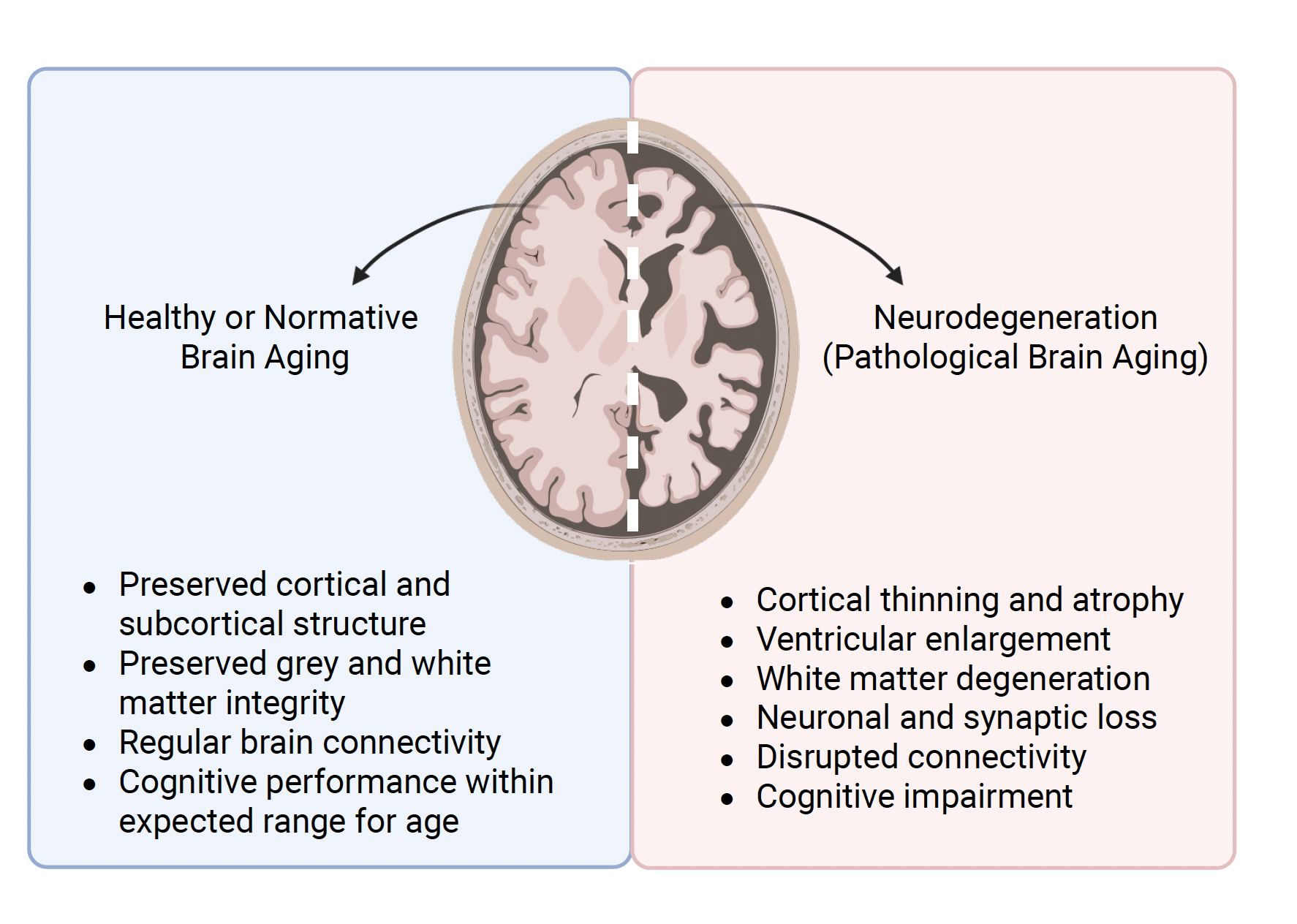
Figure 2 – Comparison of normative (healthy) brain aging and neurodegenerative (pathological) processes. Normative aging is characterized by relative preservation of brain structure, connectivity, and cognitive function, whereas neurodegeneration involves cortical atrophy, disrupted connectivity, and cognitive decline. Lifestyle factors, such as meditation, may support brain resilience and help maintain patterns associated with healthy aging. Figure created by the author; see thesis at dx.doi.org/10.11575/PRISM/51042.
Why should I care?
A well-connected and structurally robust brain brings numerous benefits:
- Improved Focus and Attention: Sharpening cognitive control means fewer distractions and enhanced productivity.
- Better Emotional Regulation: Less reactivity to stress translates to a calmer, more resilient mindset.
- Enhanced Memory and Learning: Strengthening brain networks improves recall and adaptability.
- Potential Neuroprotective Effects: Studies suggest that meditation could slow down age-related cognitive decline and protect against neurodegenerative diseases.
The Takeaway: A Simple Practice with Big Rewards
You don’t need to be a monk to experience these brain benefits. Just 10-20 minutes of daily meditation can start rewiring your brain for better mental clarity and emotional well-being. Whether you choose mindfulness meditation, deep breathing, or even guided visualization, you’re investing in a healthier, more resilient brain.
Now you know why meditation gives you that big puffy brain, and why that’s a good thing! And who doesn’t want a brain that’s stronger, calmer, and more adaptable?
References
1. Sezer I, Pizzagalli DA, Sacchet MD. Resting-state fMRI functional connectivity and mindfulness in clinical and non-clinical contexts: A review and synthesis. Neurosci Biobehav Rev. 2022;135:104583. doi:10.1016/j.neubiorev.2022.104583
2. de Filippi E, Escrichs A, Càmara E, et al. Meditation-induced effects on whole-brain structural and effective connectivity. Brain Struct Funct. 2022;227(6):2087-2102. doi:10.1007/s00429-022-02496-9
Stock photo from Unsplash.com